Volume 2, October 1st, 2026
Welcome back to This Week in Rad Onc!
This week, we continue unpacking ASTRO’s findings, with a focus on shorter treatment courses, patient experience, and the evidence needed to bring new approaches into everyday practice. I’m particularly interested in how these developments affect the entire care team and patient outcomes. Alongside the research, you’ll find industry and reimbursement updates, a case spotlight, and recruiting trials in a more accessible format. My goal remains simple: help you stay informed and identify what deserves a closer look.
Best,
Michael K Owens
Editor-in-Chief
This Week in RadOnc
Table of Contents
- Takeaways of the Week: Links to some of the big takeaways from the past week.
- Notable Publications: Key findings from influential open-access research and conference abstracts shaping radiation oncology practice.
- Industry Updates: The latest developments in technology, regulation, reimbursement, and the business of radiation oncology.
- Spotlight on Patient Care: A closer look at a publicly shared clinical case or trial dataset, highlighting treatment approaches and reported outcomes.
- Clinical Trials to Watch: Recruiting and upcoming studies exploring new radiation oncology treatments, with key eligibility and participation details.
Takeaways of the Week
- Shorter is not automatically safer. The randomized glioblastoma comparison found worse outcomes with 6 × 6 Gy plus temozolomide; that regimen should not replace the standard course in the studied population. Source
- PACE-A adds long-term comparative evidence. Five-fraction SBRT and surgery both produced high cancer-control rates, although few failures leave substantial uncertainty around the difference. Source
- Keep two-fraction adaptive prostate SABR in context. The ASTRO interim analysis describes early quality of life improvements; definitive noninferiority and long-term disease-control conclusions are pending. Source
- Head-and-neck de-escalation requires selection. HYDRA’s shorter course showed encouraging immune recovery, but failures clustered in HPV-negative advanced disease. Source
- Make adherence part of RT-omission discussions. Claims data show substantial endocrine-therapy attrition; an omitted RT course does not guarantee completion of endocrine treatment. Source
- Update the motion-management reading list. AAPM TG-324 revisits respiratory-motion workflows, implementation and QA for commonly available equipment. Source
- Separate development announcements from availability. Fuse’s iRT–SIGNAL connection is a concept under development; RAD101’s formal FDA meeting minutes remain pending. Source
- Check operational dates and recruiting centers. Palmetto’s coding revision is effective October 1. Registry updates include suspended cervical-trial centers. Source
Academic Publication Review
This week, our selection includes two breaking papers, three papers from the past month, three from earlier this year, and five ASTRO 2026 presentations. Conference findings remain preliminary. Public abstract access does not confer an open reuse license.
1. Patient-reported outcomes in radiotherapy (PRO-RT) utilizing an integrated patient portal; results from a prospective single-arm trial (BREAKING)
Yasamin Sharifzadeh; William S Harmsen; Jessica F Burlile; et al. · JAMIA Open · 2026-10-05
DOI: 10.1093/jamiaopen/ooaf172 · Free full text · CC BY-NC 4.0
Keywords: PROs; Patient portal; Engagement
Of 72 patients approached during breast, head-and-neck or thoracic RT, 27 enrolled and 18 used the integrated portal. Six-month survey completion was 94% among users versus 62% with the existing interface. Low uptake, security concerns, self-selection and survey payments limit attribution to the technology. The practical lesson is to design onboarding and trust alongside symptom collection.
2. Association of a structured nutrition-centred multidisciplinary supportive-care program with treatment tolerance and clinical outcomes in patients undergoing precision radiotherapy for head and neck cancer: a prospective cohort study (BREAKING)
Na Su; Zhongchao Huo; Zhiwei Zhang; et al. · Scientific Reports · 2026-10-01
DOI: 10.1038/s41598-026-73876-y · Free full text · CC BY 4.0
Keywords: Nutrition; Mucositis; Supportive care
Among 258 patients receiving head-and-neck RT, structured multidisciplinary nutrition support was associated with less severe mucositis (14.0% versus 26.4%) and shorter treatment delays. The difference in completing RT without major interruption was not statistically significant. Assignment depended on program availability, so these findings support supportive-care investment without establishing a causal survival benefit.
3. Maskless head and neck radiotherapy using surface‐guided radiation therapy: initial clinical feasibility of real‐time setup, intrafraction monitoring, and automatic beam‐hold (<1 MONTHS)
Adi Robinson; Shravan Kandula · Journal of Applied Clinical Medical Physics · 2026-09-25
DOI: 10.1002/acm2.70809 · Free full text · CC BY 4.0
Keywords: SGRT; Immobilization; Beam hold
Ten selected patients completed 330 maskless head-and-neck fractions using posterior support, daily CBCT and continuous surface monitoring with automatic beam hold. Seven fractions triggered beam holds. This demonstrates a tightly controlled workflow in cooperative patients, not broad equivalence to mask immobilization. Patient selection, region-of-interest design and repeat CBCT after repositioning remain central.
4. AAPM task group 324 report 91.b: The management of respiratory motion in radiation oncology (<1 MONTHS)
Paul J. Keall; Lakshmi Santanam; Laurence E. Court; et al. · Medical Physics · 2026-09-18
DOI: 10.1002/mp.70677 · Free full text · Free access; Wiley standard terms; no CC reuse license verified
Keywords: Motion management; 4DCT; QA
AAPM’s update to TG-76 addresses respiratory motion management using widely available 4DCT, planning systems and gantry-mounted X-ray guidance. It revises clinical implementation and QA recommendations and supplies a decision pathway. This is a practical departmental reading assignment for simulation, treatment and physics teams reviewing motion workflows.
5. Feasibility of multi‐energy CT and fat fraction MRI for characterizing active bone marrow response to pelvic external beam radiation therapy (<1 MONTHS)
Carolyn Eckrich; Kristin Bradley; Bethany Anderson; et al. · Journal of Applied Clinical Medical Physics · 2026-09-17
DOI: 10.1002/acm2.70794 · Free full text · CC BY 4.0
Keywords: Bone marrow; Spectral CT; MRI
Multi-energy CT and fat-fraction MRI detected dose-related marrow changes after pelvic RT. Baseline active-marrow overlap was moderate (mean Dice 0.57), and the modalities estimated different magnitudes of volume loss. The findings support further development of functional marrow-sparing workflows; they do not establish interchangeable contours or a reduction in clinical hematologic toxicity.
6. Ultra-hypofractionated versus conventional chemoradiation for newly diagnosed glioblastoma: Survival and toxicity results of a multicenter randomized trial (<6 MONTHS)
Anouk M. de Jong; Arthur T.J. van der Boog; Gerda Wester; et al. · Radiotherapy and Oncology · 2026-08-08
DOI: 10.1016/j.radonc.2026.111726 · Free full text · CC BY 4.0
Keywords: Glioblastoma; Fractionation; Safety
A prematurely closed randomized trial found that 6 × 6 Gy with temozolomide did not establish noninferiority to 30 × 2 Gy. Median survival was 13 versus 21 months, and necrosis or pseudoprogression was more frequent with six fractions. Despite limited accrual, these findings argue against replacing standard chemoradiation with this regimen in the studied fit population.
7. Prospective randomized trial of tumor-treating fields with chemoradiation in newly diagnosed glioblastoma (<6 MONTHS)
Dror Limon; Felix Bokstein; Deborah T Blumenthal; et al. · Neuro-Oncology Advances · 2026-04-24
DOI: 10.1093/noajnl/vdag106 · Free full text · CC BY 4.0
Keywords: TTFields; Glioblastoma; PFS
Adding tumor-treating fields during initial chemoradiation did not significantly improve the primary 12-month progression-free survival endpoint in this 66-patient trial. Median overall survival was also similar. A favorable evaluable-patient analysis is exploratory and does not override the negative intention-to-treat result. Both groups could receive maintenance TTFields.
8. Targeted therapies plus radiotherapy for diffuse intrinsic pontine glioma: the randomized phase 2 BIOMEDE trial (<6 MONTHS)
Marie-Anne Debily; Gwenael Le Teuff; Thomas Kergrohen; et al. · Nature Medicine · 2026-04-24
DOI: 10.1038/s41591-026-04354-1 · Free full text · CC BY-NC-ND 4.0
Keywords: DIPG; Biomarkers; Targeted therapy
BIOMEDE tested erlotinib, dasatinib or everolimus with RT in 233 patients with biopsy-confirmed DIPG. No significant survival difference emerged between randomized treatments, and none improved survival against the historical comparison. The study’s value includes tumor profiling and biomarkers for future trials; it does not establish these additions as survival-improving standard therapy.
9. HYpofractionated, Dose-redistributed RAdiotherapy (HYDRA) with Protons or Photons vs. Standard of Care for Head and Neck Squamous Cell Carcinoma: A Randomized Trial (ASTRO 2026)
P. A. Gunsch; M. Kroesen; R. Debets; et al. · ASTRO 2026, abstract 111 · 2026-09-30
Public abstract · Public abstract; no open reuse license stated
Keywords: HYDRA; Lymphopenia; De-escalation
In 108 randomized patients, 20-fraction HYDRA improved post-treatment CD8-cell recovery without reducing the lymphocyte nadir. One-year in-field control was 90% versus 96% with standard treatment. Five of six HYDRA recurrences occurred in HPV-negative stage III–IV disease. This exploratory phase I trial was not powered to establish comparable cancer control; proton allocation was model-based.
10. Efficacy of Radical Prostatectomy Versus Stereotactic Body Radiotherapy (SBRT) for Localised Prostate Cancer: Results from an international Phase III Randomised Controlled Trial (PACE - A) (ASTRO 2026)
N. van As; J. Patel; A. Tree; et al. · ASTRO 2026, abstract LBA32 · 2026-09-28
Public abstract · Public abstract; no open reuse license stated
Keywords: PACE-A; SBRT; Disease control
PACE-A reported excellent long-term control after five-fraction SBRT or prostatectomy in 123 randomized men, predominantly with intermediate-risk disease. Five-year biochemical/clinical-failure-free rates were 94.8% and 94.1%, respectively. Only 13 failures occurred, leaving wide uncertainty around comparative efficacy. These data strengthen counseling about SBRT as a nonsurgical option without proving superiority.
11. Endocrine Therapy Adherence after RT Omission in Estrogen Receptor-Positive Early-Stage Breast Cancer (ASTRO 2026)
S. J. Jiang; M. Agarwal; C. Bergom; et al. · ASTRO 2026, abstract 140 · 2026-09-27
Public abstract · Public abstract; no open reuse license stated
Keywords: Adherence; RT omission; Claims data
Claims from 17,025 patients showed fewer than 30% remained endocrine-therapy adherent at five years under the strict medication-possession threshold. Older age and RT omission were associated with nonadherence. This does not show that radiation causes better adherence, but reinforces the need to assess whether patients can sustain endocrine therapy when discussing RT omission.
12. The ART of SABR: A Randomized Phase II Trial of Near "Margin-less" Adaptive Radiation Therapy (ART) Stereotactic Ablative Body Radiotherapy (SABR) for Primary Localized Prostate Cancer: Two vs. Five Fractions (ASTRO 2026)
M. R. Waddle; B. J. Traughber Jr; C. A. Dodoo; et al. · ASTRO 2026, abstract LBA21 · 2026-09-28
Public abstract · Public abstract; no open reuse license stated
Keywords: Adaptive RT; Two fractions; Quality of life
An interim comparison of two-fraction adaptive SABR with five-fraction standard SABR found broadly similar early bowel and urinary quality-of-life changes. Only 73 patients had the primary three-month assessments. This descriptive analysis was not prespecified for efficacy testing and does not establish noninferiority or durable tumor control. Final accrual and follow-up remain essential.
13. A Prospective, Randomized Controlled Study on the Time Window of Radiotherapy Combined with Targeted Therapy for Primary Tumor in Stage IV NSCLC (ASTRO 2026)
C. Hu; Q. Li; W. Ouyang; et al. · ASTRO 2026, abstract 273 · 2026-09-30
Public abstract · Public abstract; no open reuse license stated
Keywords: NSCLC; TKI; Pneumonitis
In a 160-patient randomized study, thoracic RT starting 40–47 days after targeted therapy was associated with longer PFS than RT within the first week (23 versus 16 months), without a significant overall-survival difference. Severe pneumonitis was less frequent with later RT. Drug heterogeneity, dropouts and the original equivalence design warrant caution before applying the timing universally.
Industry Updates
RAD101 moves toward pivotal imaging development; formal FDA minutes pending
2026-10-05 · Radiopharm Theranostics · Regulatory / imaging development
Company press release via GlobeNewswire · Keywords: RAD101; PET; Regulatory
Radiopharm says it completed an end-of-phase II FDA meeting for RAD101, an investigational F-18 imaging agent for suspected recurrent brain metastases. The company is preparing for phase III and expects formal minutes within roughly 30 days. This is a company-reported development milestone, not FDA approval or confirmation that the pivotal protocol is finalized.
Palmetto radiation-therapy coding revision takes effect October 1
2026-10-01 · Palmetto GBA / CMS Medicare Coverage Database · Medicare / coding
Official contractor policy via CMS · Keywords: Medicare; ICD-10-CM; Documentation
Revision R11 of Palmetto’s radiation-therapy billing article took effect October 1, adding C78.31, C78.32 and C79.83 in specified IMRT/SBRT code groups and explanatory notes. Practices in Palmetto jurisdictions should review the current article and its linked LCD when updating charge workflows. This is a local contractor policy update, not a nationwide coverage expansion.
Fuse and GE HealthCare illustrate a potential workflow-to-charge-review connection
2026-09-27 · Fuse Oncology / GE HealthCare · Software / workflow / reimbursement
Company press release via PRNewswire · Keywords: Interoperability; Charge capture; SIGNAL
Fuse announced an ASTRO demonstration concept linking GE HealthCare’s iRT patient workflow to SIGNAL charge review while preserving patient context. The release explicitly describes a capability under development for possible future commercial availability. Efficiency and revenue-recovery figures are vendor claims; they should not be treated as independently validated outcomes or evidence of an available integration.
ASTRO bylaws vote scheduled to open October 7
2026-10-07 (scheduled voting start) · ASTRO · Professional society / governance
Official society announcement via ASTRO · Keywords: ASTRO; Physics; Governance
ASTRO’s member voting period is scheduled for October 7–November 6. Proposed changes include a dedicated physicist membership category with voting and leadership pathways, two at-large board seats, and a phased transition to a smaller board. These remain proposed amendments requiring member approval; they are not current governance rules.
Spotlight on Patient Care
Low-dose RT in multimodal salvage for SMARCA4-deficient NSCLC
Tong Bu, Nan Zhang, Tong Jin, et al. · Frontiers in Oncology · 2026-10-05
DOI: 10.3389/fonc.2026.1941008 · Public single-patient report; no NCT or trial registration applies.
Case summary: A public single-patient report describes tumor regression and sustained control after chemotherapy, serplulimab and repeated low-dose RT for rapidly progressing SMARCA4-deficient NSCLC. The combined treatment prevents attribution of benefit to radiation alone.
Public case details: A 61-year-old man developed gingival and cervical metastases after surgery and initial chemo-immunotherapy.
Planning and delivery: Eight low-dose RT courses targeted neck/mediastinal disease. The first included regional clinical target volumes; later courses focused on gross nodal disease. Reported courses used 5 Gy in 10 fractions.
Reported outcomes: The authors report partial response on August 2025 MRI, no measurable residual lesion on March and June 2026 CT, and clinical stability through June 2026. These are this patient's reported outcomes, not proof of efficacy.
Investigator profile: No trial principal investigator applies. Corresponding author Xia He is affiliated with Radiation Oncology at Jiangsu Cancer Hospital/Nanjing Medical University; the paper credits supervision and investigation.
Access and permissions: CC BY; written consent for publication of potentially identifiable images/data is reported. The article includes imaging figures and supplements; no downloadable DICOM dataset is identified. Further data inquiries go to the corresponding author. Case, author affiliation, figures and consent statement
Clinical Trials to Watch
Registry status was checked 2026-10-06 through ClinicalTrials.gov. All 20 studies below were listed as recruiting, with at least one recruiting location. Coverage is based on site-level registry status, not direct confirmation of an open slot.
Proton Beam Radiation Therapy After Treatment for Resected N2 Non-Small Cell Lung Cancer
NCT06008730 |
|
Emory University
Recruiting: Emory University Hospital/Winship Cancer Institute, Atlanta, Georgia, United States
Lung - Phase II |
|
This phase II study evaluates postoperative proton therapy after complete resection when mediastinal nodal disease persists after preoperative systemic treatment. It targets a clinically difficult group needing improved locoregional control with limited cardiopulmonary exposure. |
Radiotherapy to Block Oligoprogression In Metastatic Non-Small-Cell Lung Cancer
NCT06686771 |
|
Canadian Cancer Trials Group
Recruiting: Canada (4 sites); United States (71 sites)
Lung - Phase III |
|
CURB2 tests whether ablating limited progressing lesions can improve disease control during first-line immunotherapy-based treatment for metastatic NSCLC. This phase III trial compares standard care with or without radiation to oligoprogressive sites. |
A Randomized Trial of Five Fraction Partial Breast Irradiation (RAPID2)
NCT05417516 |
|
Ontario Clinical Oncology Group (OCOG)
Recruiting: Australia (12 sites); Canada (18 sites)
Breast - Phase III |
|
RAPID2 compares one-week partial-breast and whole-breast irradiation in selected node-negative patients after lumpectomy. The central question is whether a smaller treated volume can preserve control and improve the treatment experience within an already shortened schedule. |
Stereotactic Ablative Radiotherapy for OligoMetastatic Breast Cancer
NCT05377047 |
|
Vastra Gotaland Region
Recruiting: Ireland (4 sites); Israel (1 sites); Italy (3 sites); Norway (4 sites); Slovenia (1 sites); Sweden (6 sites)
Breast - Phase III |
|
TAORMINA evaluates metastasis-directed SABR added to first-line systemic therapy in oligometastatic breast cancer. Its randomized design is important because results from mixed-histology oligometastatic studies cannot automatically be transferred to breast cancer. |
JNJ-90301900 (NBTXR3) Activated by Radiotherapy With or Without Cetuximab in LA-HNSCC
NCT04892173 |
|
Johnson & Johnson Enterprise Innovation Inc.
Recruiting: 133 sites in 19 countries across North America, Europe, Asia and Brazil
Head and neck - Phase III |
|
NANORAY-312 tests tumor-injected JNJ-90301900 (NBTXR3), activated by radiotherapy with or without cetuximab, in older patients with locally advanced head-and-neck squamous cancer who cannot receive platinum chemotherapy. |
Omission of Postoperative Radiation in HPV-Associated Oropharyngeal Cancer Using ctHPVDNA Surveillance (OPERATION)
NCT07513389 |
|
Medical University of South Carolina
Recruiting: Medical University of South Carolina, Charleston, South Carolina, United States
Head and neck - Phase II |
|
OPERATION studies omission of adjuvant radiation after transoral surgery in tightly selected HPV-associated oropharyngeal cancer with favorable postoperative biomarker findings. This is experimental de-escalation under protocol surveillance, not a general recommendation to omit indicated postoperative RT. |
Adaptive Versus Non-adaptive Radiotherapy and 2 Bladder Filling Instructions for Patients With Intermediate or High Risk Localized Prostate Cancer (ARP)
NCT06678126 |
|
Scott Tyldesley
Recruiting: BC Cancer Vancouver, Vancouver, British Columbia, Canada
GU / prostate - Phase II |
|
ARP examines daily online adaptation during moderately hypofractionated prostate and pelvic radiotherapy, with a parallel bladder-preparation comparison. The study is relevant to reproducibility, normal-tissue exposure and the staffing demands of adaptive treatment. |
PSMA-PET Guided De-escalation of Salvage Radiation Treatment in Recurrent Prostate Cancer
NCT07234981 |
|
University of Nebraska
Recruiting: University of Nebraska Medical Center, Omaha, Nebraska, United States
GU / prostate - Phase II |
|
This phase II study uses PSMA PET and MRI to personalize salvage radiation after prostatectomy. It evaluates a targeted approach in patients with visible pelvic or prostate-bed recurrence, while retaining systemic and elective-volume treatment specified by the protocol. |
Extending Outcomes for Pancreas Cancer Patients With Nominal Oligometastatic Disease (EXPAND): A Randomized Phase III Trial
NCT06593431 |
|
M.D. Anderson Cancer Center
Recruiting: United States (4 sites)
Pancreas - Phase III |
|
EXPAND is a phase III test of comprehensive local treatment added to systemic therapy for oligometastatic pancreatic cancer. Radiation is one permitted local modality. Progression-free and overall survival will determine whether promising earlier signals translate into broader benefit. |
Simultaneous Boost in Neoadjuvant Radiotherapy for Rectal Cancer
NCT07200141 |
|
Peking Union Medical College Hospital
Recruiting: Peking Union Medical College Hospital, Beijing, China
Rectum - Phase II |
|
This randomized phase II study tests whether a simultaneous integrated boost increases complete response in locally advanced rectal cancer. Both groups receive concurrent chemotherapy; subsequent surgery or observation depends on restaging and protocol-guided assessment. |
Beginning Radiation Immediately With GammaTile at GBM Excision Versus Standard of Care
NCT07195591 |
|
GT Medical Technologies, Inc.
Recruiting: United States (13 sites)
CNS / Glioblastoma - Phase III |
|
BRIDGES evaluates immediate surgically implanted radiation followed by shorter external-beam treatment against standard postoperative chemoradiation for newly diagnosed glioblastoma. The phase III design tests clinical benefit beyond the device’s existing clearance. |
Brain Metastases in Greater Size - Hypofractionated Options Trial (BIGSHOT)
NCT07227610 |
|
Medical University of South Carolina
Recruiting: Medical University of South Carolina Hollings Cancer Center, Charleston, South Carolina, United States
CNS / Brain Metastases - Phase II |
|
BIGSHOT compares staged stereotactic radiosurgery with fractionated stereotactic radiotherapy for large intact brain metastases. It addresses unresected lesions and competing stereotactic schedules, with local control and toxicity guiding the comparison. |
Induction Pembrolizumab and Chemotherapy Followed by Pembrolizumab Before Chemoradiation and Pembrolizumab Maintenance Compared to Standard Chemoradiation With Pembrolizumab Followed by Pembrolizumab Maintenance in High-Risk Cervical Cancer
NCT07061977 |
|
National Cancer Institute (NCI)
Recruiting: Puerto Rico (2 sites); United States (321 sites)
Cervix - Phase III |
|
This phase III study tests systemic intensification before definitive chemoradiation in high-risk locally advanced cervical cancer. The comparison asks whether induction therapy improves outcomes beyond a chemoradiation-plus-pembrolizumab backbone. |
Refining Adjuvant Treatment IN Endometrial Cancer Based On Molecular Features (RAINBO) - NSMP-ORANGE Trial: Comparing Radiotherapy With Oral Progestin Tablets vs. the Current Standard Care, Radiotherapy and Chemotherapy, in Patients With NSMP Endometrial Cancer
NCT07831902 |
|
University College, London
Recruiting: United Kingdom (12 sites)
Endometrium - Phase III |
|
RAINBO NSMP-ORANGE tests molecularly selected adjuvant treatment for ER-positive NSMP endometrial cancer. It asks whether replacing chemotherapy with progestin after radiation can preserve efficacy while reducing toxicity and improving quality of life. |
Comparison Between Local Radiotherapy Alone or Combined With Obinutuzumab in Early Stage Follicular Lymphoma: the GAZEBO Trial From the Fondazione Italiana Linfomi
NCT05929222 |
|
Fondazione Italiana Linfomi - ETS
Recruiting: Italy (43 sites)
Follicular Lymphoma - Phase III |
|
GAZEBO evaluates whether adding obinutuzumab to radiation improves outcomes in early-stage follicular lymphoma. The study keeps a potentially curative local approach while testing whether systemic antibody treatment reduces subsequent relapse. |
PET Guided Dose Reduction for Involved Site Radiotherapy In Early Stage Unfavourable Hodgkin Lymphoma
NCT07256158 |
|
Fondazione Italiana Linfomi - ETS
Recruiting: A.O.U. Città della Salute e della Scienza di Torino - S.C. Ematologia, Torino, Italy
Hodgkin Lymphoma - Phase III |
|
PRIORITY tests involved-site radiation-dose reduction in early unfavorable Hodgkin lymphoma after PET-confirmed chemotherapy response. It asks whether reduced treatment intensity can maintain disease control while limiting late effects. |
A Study of Treatment for Medulloblastoma Using Sodium Thiosulfate to Reduce Hearing Loss
NCT05382338 |
|
Children's Oncology Group
Recruiting: Canada (5 sites); United States (102 sites)
Pediatric CNS / Medulloblastoma - Phase III |
|
ACNS2031 integrates hearing protection and risk-adapted therapy for pediatric medulloblastoma. The study includes sodium thiosulfate with chemotherapy and evaluates reduced radiation in selected low-risk disease, with central eligibility review essential before treatment assignment. |
NRSTS2021, A Risk Adapted Study Evaluating Maintenance Pazopanib, Limited Margin, Dose-Escalated Radiation Therapy and Selinexor in Non-Rhabdomyosarcoma Soft Tissue Sarcoma (NRSTS)
NCT06239272 |
|
St. Jude Children's Research Hospital
Recruiting: United States (7 sites)
Pediatric Soft-tissue Sarcoma - Phase I/II |
|
NRSTS2021 studies risk-adapted therapy for children and young adults with non-rhabdomyosarcoma soft-tissue sarcoma. Radiation questions include limited margins and dose escalation; systemic combinations differ by risk group, and not every participant receives radiation. |
SATURN-STS: Phase II Study of Neoadjuvant Atezolizumab With Doxorubicin, Concurrent Atezolizumab With Pre-operative Radiation Therapy and Adjuvant Atezolizumab in Patients With High-risk Surgically Resectable Extremity and Truncal Soft Tissue Sarcoma
NCT07049848 |
|
M.D. Anderson Cancer Center
Recruiting: The University of Texas M. D. Anderson Cancer Center, Houston, Texas, United States
Extremity / Trunk Soft-tissue Sarcoma - Phase II |
|
SATURN-STS evaluates doxorubicin and atezolizumab followed by preoperative radiation with atezolizumab, surgery and postoperative atezolizumab in adults with high-risk resectable extremity or superficial-trunk sarcoma. The phase II study measures relapse timing and safety. |
PARP Inhibition, Stereotactic Body Radiotherapy and Immunotherapy for Metastatic or Advanced Sarcoma (PRIMA)
NCT06074692 |
|
Ruijin Hospital
Recruiting: Ruijin Hospital, Shanghai Jiao Tong University, School of Medicine, Shanghai, Shanghai Municipality, China
Bone / Soft-tissue Sarcoma - Phase II |
|
PRIMA combines fluzoparib, camrelizumab and SBRT for previously treated, advanced bone or soft-tissue sarcoma. Patients aged 10–70 with measurable disease and lesions amenable to radiation enter histology-specific cohorts to assess activity, safety and exploratory biomarkers. |
Did you know?
Patients really can see radiation-generated light.
Researchers have directly recorded Cherenkov light emerging from a patient’s eye during radiotherapy, supporting an explanation for the flashes some patients report seeing during treatment.
The researchers attribute the light to either direct excitation of retinal pigments or generation of Cherenkov light inside the eye.
Cherenkov light, if you haven't heard of it before, is a faint blue glow produced when high-speed charged particles move through a clear medium faster than the speed of light in that material would normally be.
|
|
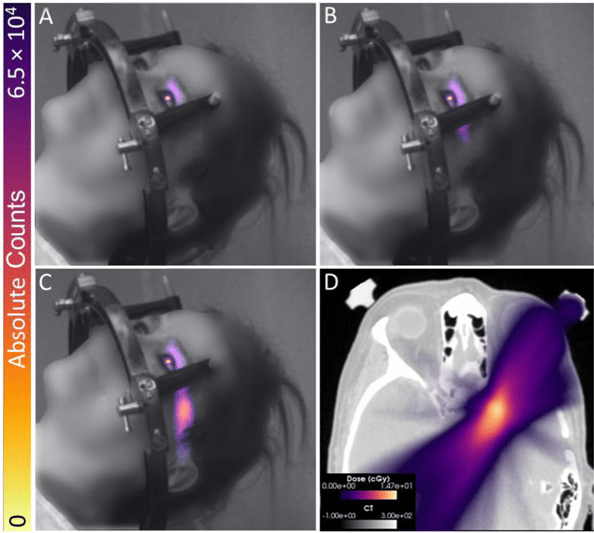 Tendler II, Hartford A, Jermyn M, et al. Experimentally Observed Cherenkov Light Generation in the Eye During Radiation Therapy. Int J Radiat Oncol Biol Phys. 2020;106(2):422-429. doi: 10.1016/j.ijrobp.2019.10.031
Copyright © 2019 The Author(s). Published by Elsevier Inc. All rights reserved. |
A Final Note
Thank you once again for joining us for this roundup of all things radiation oncology this week. If you found one portion of the newsletter more useful than others or have any feedback about what kind of content we could include, we'd love to hear more from you. You can provide us with any feedback about the content of the newsletter, submit content you'd like to see in the newsletter, or just say hi by sending an email to thisweekinradonc@gmail.com
Best,
|